

Conversation: Cindy Ball, filmmaker
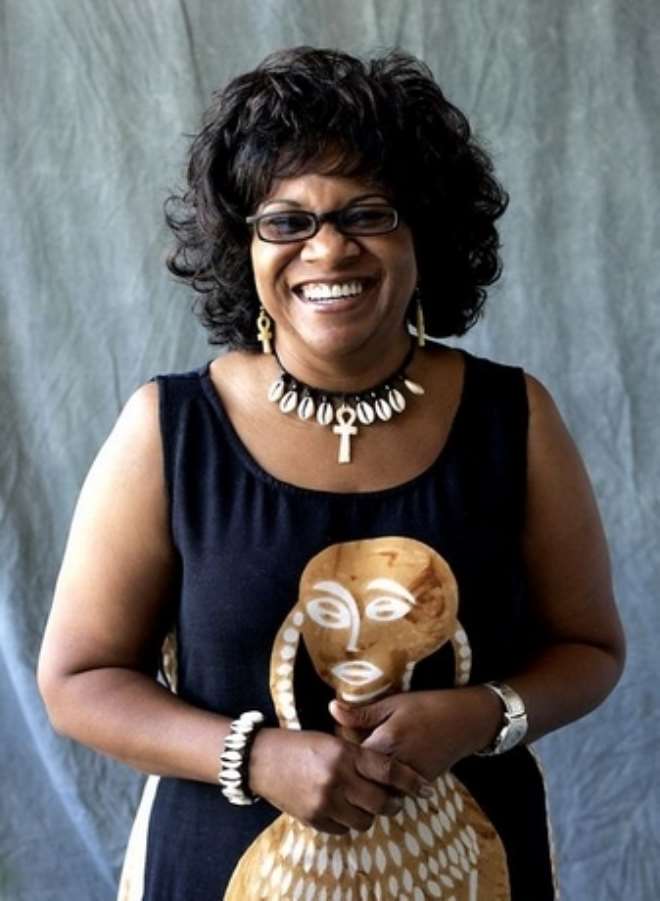
Cindy Ball's interest in filmmaking led her to create the documentary "An African American Quest for Authenticity." - Frank Espich / The Star
Cindy Ball has traveled to nine African nations in the past 20 years -- from Kenya to Nigeria, Botswana to Senegal -- which has given her plenty of time to ruminate on what it means to explore one's roots as an African-American.
Her interest in filmmaking led her to create the documentary "An African American Quest for Authenticity," in which she followed 21 people who had "repatriated" to the land of their ancestry, immersing themselves in the culture and finding out what it's like to live as an African.
Her film will be shown Saturday as part of the two-day Indiana Black Expo Film Festival at the Indianapolis Museum of Art's Tobias Theater.
Originally from Spartanburg, S.C., Ball lives in Indianapolis with her husband, Wes Barnard, and has three children and two grandchildren. In May, the longtime educator -- who has taught students from elementary school to college -- received a master's degree in digital storytelling from Ball State University. The 26-minute "An African American Quest" is the first in what she hopes will be a series of films.
What started your interest in the subject of "repatriation?"
The ultimate message is that African-Americans have been here more than 400 years. Some of them have chosen to adopt the African-American way but distance themselves from the African portion of their life. Others have chosen to honor the African part of themselves, while still others have made the move to Africa and live as authentically African as they can, while still maintaining that American part of themselves.With that choice, it's not a denial or a putdown of Americans; it's just honoring that other part of themselves.
What message are you trying to convey with this film?
My intention is to invite other people who have ancestry in other countries to explore their past. They can reconnect on a spiritual level and a physical level with that part of themselves.
What did you learn about yourself, or about African-Americans in general, that surprised you while you were making the film?
The thing that impressed me is that this connection to Africa is much more than a curiosity. It's much deeper than that. Most people remember Africans only as being brought here as slaves, but Africans were trading with Indians long before Columbus arrived here. For those who remember Africans as slaves -- the trauma they went through, the cramped conditions in slave quarters, coming over here on boats, and their mistreatment once they arrived . . . African-Americans still feel that today. We're (not that many years) out of the Civil Rights movement, and many of us still feel that.










Latest News
-
 DJ Timmy Calls Out Timi Dakolo Over Alleged Debt,
 -
 Alex Unusual Says Emotional Suppression Is Not Pro
 -
 Yvonne Jegede Says Nigerians Make It Hard For Cele
 -
 Your Birthdays Excite Me More Than They Do You – I
 -
 Jide Awobona Slams Colleagues Who Troll, Shade Fel
 -
 RMD Joins Male Feminists Network, Advocates For Wo
 -
 Bisola Aiyeola Shares Painful Lesson On Inheriting
 -
 Don't Rush Into Marriage Without Money – Jarvis
 -
 My Daughters Asked Why They Have Different Moms –
 -
 Peller Vows To Cut Off Celebrities Who Skip His Wh